
Every club has opponents. Arsenal has a hierarchy. At the top sits a north London fixture so loaded with local meaning that supporters plan their season around it before a ball is kicked. Below that, rivalries shaped by era, geography, and the specific pain of watching a title slip away to the same opponent three years running.
Understanding Arsenal’s rivalries isn’t just a list of who they dislike. It’s a map of the club’s competitive history — who they’ve fought hardest, who they’ve lost to at the worst moments, and which fixture still produces a different kind of nerves than any other match on the calendar.
In my honest opinion, the North London Derby alone would be enough to explain what Arsenal means to its supporters. Everything else adds context. The derby is the foundation.
Tottenham Hotspur: the rivalry that everything else is measured against
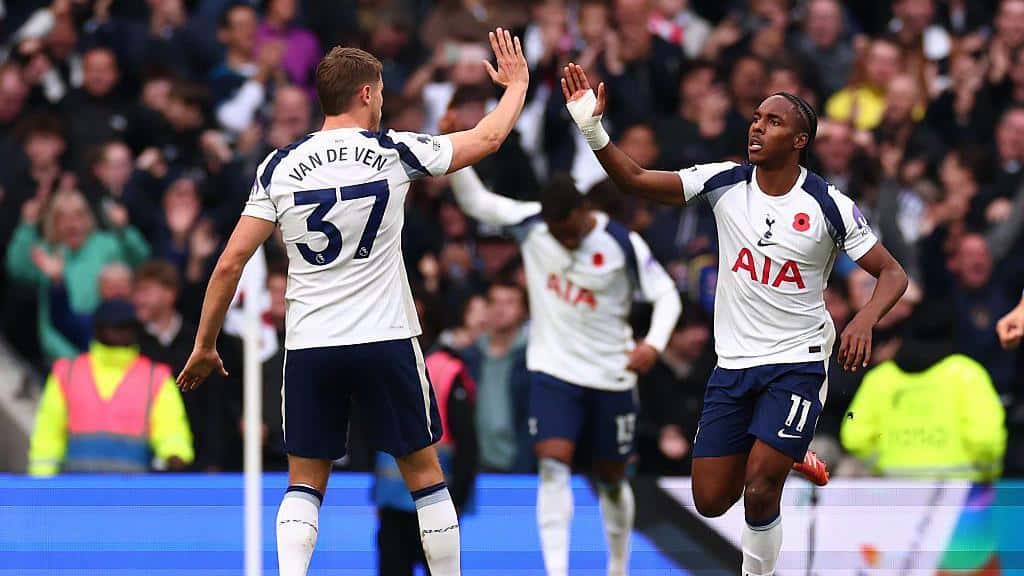
The North London Derby is Arsenal’s fiercest fixture, and it isn’t particularly close. Tottenham Hotspur are the opponent that generates a different emotional register entirely — not just another must-win, but the one where the result carries meaning well beyond three points.
The rivalry has its roots in geography. Arsenal and Spurs share north London; their grounds are less than four miles apart. When Arsenal moved from Woolwich to Highbury in 1913, they planted themselves in Spurs’ territory. Tottenham objected to the move at the time, arguing it would damage their support base. They were overruled. The resentment calcified into rivalry over the following decades.
What makes it bite is the asymmetry of recent history. Arsenal have won 14 top-flight league titles; Spurs have not won the league since 1961.
Arsenal moved into a 60,000-seat stadium; Spurs eventually built one too, at enormous cost, and are still waiting for a league title to justify it. Every North London Derby carries that weight. Even when neither side is near the top of the table, the fixture is a referendum on which club’s trajectory is pointing in the right direction.
The atmosphere at a North London Derby is unlike anything else in Arsenal’s calendar. You can feel it in the week before the match; you can hear it in the stadium from the first minute. In my view, if you want to understand what Arsenal means to its supporters at a visceral level, there is no better single exhibit than this fixture under lights at the Emirates, when both sets of supporters are loud and the first tackle lands hard.
Manchester United: the rivalry that defined an era
The Arsenal–Manchester United rivalry was at its most intense between the late 1990s and the mid-2000s — a period when the two clubs were genuinely the dominant forces in English football and took genuine dislike of each other to a level that occasionally spilled well beyond the pitch.
The defining image of that era is Patrick Vieira versus Roy Keane in the tunnel at Highbury in 2005. Two captains, two temperaments, trading words in a corridor before a match that neither side was willing to treat as routine. The clip is still watched because it captured something that doesn’t get manufactured: two players who genuinely couldn’t stand each other, representing clubs that had been fighting over the same territory for nearly a decade.
Understanding the club’s place in English football requires understanding this period specifically — because it was Arsenal and Manchester United competing at the summit simultaneously that gave both clubs’ identities much of their modern shape.
Arsenal’s possession-based, technically superior football against United’s physical intensity and winning mentality produced matches that were genuinely uncomfortable to watch and impossible to look away from.
The rivalry has cooled since then; United’s decline from sustained title contention changed the stakes. Arsenal don’t play United with the same edge they did when Arsène Wenger and Sir Alex Ferguson were managing simultaneously and refused to shake hands after matches. But the history is deep enough that a United–Arsenal game still carries more weight than a standard fixture. In my view, some of that original intensity lives in the fixture even when both clubs’ circumstances have shifted. Memory is slow to leave a rivalry.
Chelsea: the London fixture that never quite reaches the same heat
Chelsea is a genuine rivalry without quite being the rivalry. Arsenal and Chelsea are London clubs separated by the width of the city, and their head-to-head record across the Premier League era is closely contested — but the fixture has never produced the same embedded animosity as the North London Derby or the sustained era-defining competition of the United years.
What it has produced is significant cup history. Arsenal have beaten Chelsea in two FA Cup finals in the last decade: 2–1 in 2017 (Alexis Sánchez and Aaron Ramsey scoring) and 2–1 again in 2020 (Pierre-Emerick Aubameyang scoring twice). Two finals, same scoreline, same winner. Chelsea supporters have not forgotten either result.
The more interesting Chelsea–Arsenal tension has played out in the table rather than in individual matches. In the 2003-04 Invincibles season, Arsenal finished 11 points ahead of Chelsea in the league; the following season, Roman Abramovich’s investment transformed Chelsea into title challengers and changed the financial landscape of English football permanently. Arsenal went from dominant to competitive to, for a period, unable to match the spending of the clubs above them.
In my humble opinion, the Chelsea rivalry is best understood as a story about proximity and resource rather than pure sporting animosity. Two London clubs, competing for the same city, with very different ownership models; the friction is real even when the heat of the fixture fluctuates.
Liverpool and Manchester City: the title rivals who made it personal
Liverpool and Manchester City occupy a different category in Arsenal’s rivalry landscape. Neither is a local derby; neither carries the historical personal edge of the United period. What they have instead is something more recent and arguably more painful: the specific experience of watching the same opponent take a title away from you at the last moment.
Liverpool are connected to one of Arsenal’s most famous results — the 1988-89 title decider at Anfield, when Michael Thomas scored in injury time to win the championship for Arsenal on goal difference. That match runs in the opposite direction to the usual rivalry narrative; it is one of Arsenal’s greatest moments, set against Liverpool’s backdrop. The more recent dynamic has Liverpool as title contenders in the same seasons Arsenal were finishing runners-up, making them competitive obstacles rather than symbolic enemies.
Manchester City have become the rivalry of this specific era. Three consecutive Arsenal runners-up finishes — in 2022-23, 2023-24, and 2024-25 — were directly caused by City winning the title Arsenal had been leading. The 2025-26 season finally reversed it; Arsenal held City off across a full campaign. Haaland equalising in stoppage time at Bournemouth on May 19, only for the draw to confirm Arsenal’s title rather than keep City’s hopes alive, was almost poetically appropriate as a final image.
In my view, the City rivalry is the one that defined Mikel Arteta’s tenure until this season — and the one that will look very different in hindsight now that Arsenal have finally finished above them. Rivalries are reshaped by outcomes; this one just got significantly reshaped.
What Arsenal’s rivalries reveal about the club
The pattern across all of Arsenal’s major rivalries is the same: they are most intense when there is something real at stake — local supremacy, title races, cup finals, eras of dominance. When the stakes drop on one side, the fixture cools. When they’re both competing at the top, it burns.
The North London Derby stays hot regardless of table position because geography doesn’t change with form. That’s what separates it from everything else; you don’t need to be title contenders to hate losing to your neighbours.
Everything else — United, Chelsea, City, Liverpool — has ebbed and flowed with circumstances. In my honest opinion, that’s actually a more interesting rivalry structure than a fixed list of permanent enemies. Arsenal’s competitive landscape has shifted with every era… and the club’s identity has been partly written by whoever they were fighting hardest against at any given moment.
Right now, that fight is in Budapest. Against PSG — the club that knocked Arsenal out in the Champions League semi-finals last season. Whatever happens on May 30, that fixture adds another chapter to a rivalry that didn’t exist a year ago and now has the highest possible stakes.
Frequently Asked Questions
Who are Arsenal’s biggest rivals?
Tottenham Hotspur are Arsenal’s primary rivals — the North London Derby is the fixture that carries the most weight in the club’s calendar, regardless of where either side sits in the table. Manchester United represent the most intense era-defining rivalry from the late 1990s to mid-2000s. Chelsea and Liverpool are significant fixtures; Manchester City have become the defining competitive rival of the Arteta era. In my honest opinion, start with the North London Derby if you want to understand what Arsenal rivalry means at its most fundamental level.
Why is the North London Derby so intense?
The intensity comes from geography and history combined. Arsenal and Spurs share north London, with grounds less than four miles apart. When Arsenal relocated to Highbury in 1913, Tottenham objected to the move as a direct threat to their supporter base. That original friction calcified into something deeper over the following decades. The trophy gap; Arsenal’s 14 league titles against Spurs’ last title in 1961 — adds a layer of competitive asymmetry that keeps the fixture meaningful even when table positions don’t reflect it.
What is the history of the Arsenal vs Manchester United rivalry?
The Arsenal–Manchester United rivalry was at its peak between roughly 1996 and 2005, when both clubs were consistently competing for the title and had managers — Wenger and Sir Alex Ferguson — who brought genuine personal edge to the competition. The Patrick Vieira–Roy Keane dynamic captured it best: two captains who visibly disliked each other representing clubs in a genuine footballing war. The rivalry has cooled since United’s decline from sustained title contention, but the history is deep enough that the fixture still carries weight. In my view, it remains the defining inter-club rivalry of the Premier League’s formative era.
Do Arsenal and Chelsea have a rivalry?
Arsenal and Chelsea have a competitive rivalry with significant cup history — Arsenal have beaten Chelsea in two FA Cup finals since 2017, both 2–1. The fixture carries genuine edge as a London derby, though it has never reached the sustained personal intensity of the North London Derby. In my humble opinion, the Chelsea rivalry is as much about the financial transformation Abramovich’s arrival triggered in the mid-2000s — which directly affected Arsenal’s ability to compete at the top — as it is about individual matches.
Is PSG now an Arsenal rival?
PSG aren’t a traditional rival in the domestic sense, but the fixture has taken on real weight very quickly. PSG knocked Arsenal out of the 2024-25 Champions League semi-finals; Arsenal face them again in the 2025-26 Champions League final in Budapest on May 30. A rematch at that level, with that history, in a one-off final — in my honest opinion, that meets any reasonable definition of a rivalry that matters. Whether it develops into something longer-standing depends on how many times these two clubs end up in the same competitions at the same stage. Right now, one night in Budapest will do.