
The Arsenal Training Centre didn’t get its 2024 sponsor name for decoration: Arsenal linked the Sobha Realty deal to a £49.0 million commercial-revenue jump in one year.
That money trail makes London Colney more than a place with pitches. It shows how a training ground can become a football department, a commercial asset. A piece of club identity all at once.
The story starts with Arsène Wenger wanting control after Arsenal’s old University College London Union setup fell short. A fire caused £50,000 of damage there. Not dramatic by modern football standards, but enough to expose the weakness.
Then came a £10 million build, helped by Nicolas Anelka’s sale to Real Madrid. The result was a 140-acre base built fast, then changed again and again. In my honest opinion, the sponsor name matters. The stubborn “London Colney” nickname tells you what fans think belongs to them.
Why Arsenal built a new training base
 A £22.5 million windfall did not build Arsenal’s new base so much as expose how badly the club needed one. Nicolas Anelka’s sale to Real Madrid in August 1999 gave the club rare financial room.
The sharper issue was not cash. It was control.
Before the move, Arsenal trained at the University College London Union Sports Ground. That meant sharing a facility that wasn’t designed around a Premier League first-team operation. After Arsène Wenger arrived in 1996, that compromise became harder to defend.
Wenger wanted the week shaped around the team, not around someone else’s timetable. Training surfaces, recovery work, player routines, privacy, food, meeting space… all of it mattered to him. In my view, that demand for daily control was one of the quiet reasons Arsenal modernized so quickly under him.
The old arrangement also carried practical risk. Jobs In Football reported that a fire at the University College London facility caused £50,000 of damage after Wenger’s arrival. That kind of disruption made the case for a club-owned environment feel less like luxury and more like basic professional planning.
The obvious story is that Arsenal sold Anelka and spent the proceeds. The new site cost £10 million, with that bill tied directly to the £22.5 million Real Madrid transfer. But money only explains how the project happened, not why Wenger pushed so hard for it.
When the Arsenal Training Centre opened in October 1999, it gave the club a base built around its own standards. No groundshare.
No borrowed rhythm. No sense that elite preparation had to fit into a space made for other users.
That was the real break from the past. Arsenal did not just buy land and buildings.
It bought command over the working week. For a manager who treated preparation as performance, that mattered as much as any player signing.
What the London Colney site actually contains
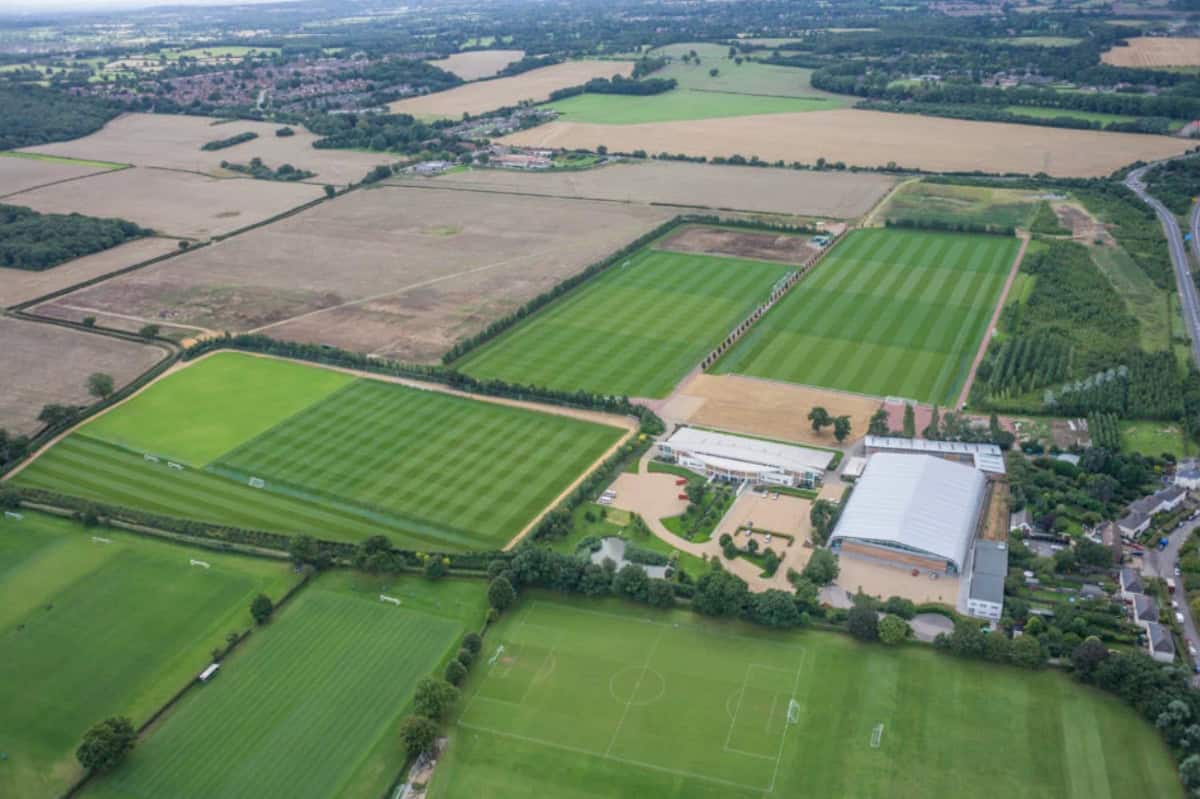
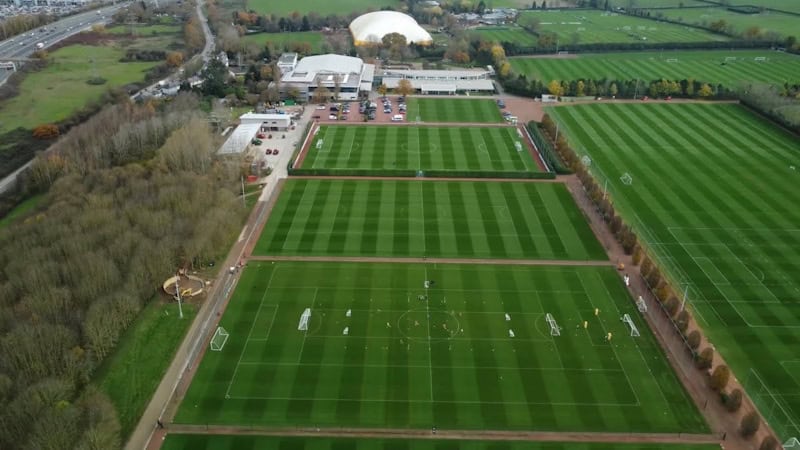
The most revealing number at London Colney isn’t a transfer fee or a crowd figure: it’s ten full-size pitches tucked inside a private football operation in Hertfordshire.
That scale sounds excessive at first. It isn’t. Elite squads don’t train as one neat group on one neat surface.
First-team players, reserves, academy groups, injury returnees, trial structures, tactical units, and closed-session work all need space at the same time. Ten pitches give coaches options. They also give the club privacy… and that’s exactly what a public stadium can’t provide.
The site is arranged as a working football campus, not a showpiece for visitors. According to Jobs In Football, the pitch allocation has included three for the first team, three for reserves, three for youth teams, and one used for first-team friendlies and Under-18 fixtures.
That split tells you the real purpose of the complex. It keeps the whole football pathway in one controlled environment without forcing every squad to compete for the same grass.
Surface quality matters just as much as quantity. The same source notes that all ten pitches have undersoil drainage and automated sprinkler systems. Two also have undersoil heating and are built to match Emirates Stadium playing-surface specifications.
The point isn’t luxury. It’s repetition. Players should feel the same ball speed, footing, and surface response in training that they’ll face under pressure.
Inside, the Arsenal Training Centre also includes an indoor facility and a medical and rehabilitation centre. The rehab side became a major part of the site’s daily function by 2011, with specialist equipment such as an anti-gravity treadmill used for injured players. In my honest opinion, this is where the place earns its value: not in the photos of perfect pitches, but in the quiet work that gets players back from injury without rushing the process.
How the centre changed after opening
The original version solved Arsenal’s control problem. The later versions had to solve the speed problem.
Elite football changed faster than the buildings around it. A base that looked advanced in 1999 could feel dated within a few recruitment cycles if the club didn’t keep adding better recovery spaces, cleaner player-flow, and more adaptable surfaces.
That’s why the site has never really been “finished.” Arsenal have kept modifying it in layers rather than treating it as a sealed project. The biggest difference is intent.
The first build gave the squad privacy, consistency. A permanent home for preparation. Later upgrades pushed the place toward performance detail: recovery, analysis, injury management, and day-to-day squad readiness.
One telling example came in February 2015, when Arsenal ordered 1,400 m² of artificial turf from the Swiss company Tisca Tiara, according to SWI swissinfo.ch. That’s not the kind of change most supporters notice.
It matters because surface variety affects how a club manages workload across a long season. Grass alone doesn’t answer every training need.
The tradeoff is clear. A purpose-built centre gives a club a head start. It can also lock the club into yesterday’s assumptions.
You can’t knock everything down each time sports science moves on. You have to retrofit, reconfigure, and upgrade without disrupting the players who need the place every day.
Modern preparation now depends on that flexibility. A player’s day is no longer just pitch work and a shower. It includes screening, recovery planning, nutrition, gym blocks, medical checks, and tactical meetings that need to connect without wasting time. In my humble opinion, that’s where the centre’s real value sits: not in looking new, but in letting staff make better decisions faster.
Why fans still call it London Colney
A sponsor can buy the sign on the gate. It can’t buy two decades of supporter habit in one announcement.
On 2 February 2024, Arsenal announced the Sobha Realty Training Centre as the branded sponsorship name for the club’s training base. BBC News reported that this was the first time Arsenal had renamed the facility since moving there. That matters.
The official title changed overnight. The language around the club didn’t.
Fans and reporters still say “London Colney” because it works as football shorthand. It’s a synecdoche: the place-name stands in for the whole complex, the daily training routine, injury updates, squad photos, academy call-ups, and those familiar lines about a player being “back at Colney.” You’ll hear it in match coverage, transfer talk, and supporter conversation because it’s quicker and more emotionally loaded than a sponsor-led title.
The split also reflects how modern football speaks in two registers. Commercial documents use the sponsored name. Ordinary football conversation uses the old location marker.
Both refer to the same working base used by Arsenal Football Club. They carry different meanings.
There’s a hard business reason for the rebrand, though. For the year ended 31 May 2024, Arsenal’s commercial revenue reached £218.3 million, up from £169.3 million the previous year. The club’s annual report linked that rise in part to the naming-rights deal.
So the sponsor name isn’t decorative. It sits inside Arsenal’s wider revenue strategy.
But football memory doesn’t follow finance reports. In my view, that’s why “London Colney” still lands harder than the sponsored name. The sponsor gets the formal title. The old place-name carries the weight in football conversation… and that tells you what fans remember first.
Conclusion
The next shift at London Colney won’t be judged by a sign on the gate. It will be judged by what Arsenal can measure inside the building: recovery time, academy readiness, squad availability. The women’s team’s access to elite space.
The 2 February 2024 rename gave Arsène Wenger‘s old control project a new commercial skin. That feels awkward to some fans.
It also shows how modern clubs pay for private advantages. A site of about 143 acres now has to serve football, finance, identity, and memory at the same time.
In my humble opinion, london Colney will survive as the fan name because it does something a sponsor can’t. It points to a place, not a contract.
Frequently Asked Questions
Where is Arsenal’s training ground located?
It’s in London Colney, Hertfordshire, just north of London. People still call it London Colney for short, even though the site is officially the Sobha Realty Training Centre for sponsorship reasons. That shorthand sticks because it’s the location fans usually mean.
When did Arsenal Training Centre open?
It opened in October 1999. The move replaced Arsenal’s old groundshare setup at University College London. That change mattered more than the date itself… it gave the club a proper home base. In my view, that was a smart long-term move, not just a flashy one.
How much did Arsenal’s training facility cost to build?
It cost £10 million to build. The project was financed by the £22.5 million sale of Nicolas Anelka to Real Madrid.
The club turned transfer money into infrastructure fast. That’s a cleaner story than most clubs can tell.
What facilities are at Arsenal’s training complex?
The site has ten full-size pitches, an indoor facility. A medical and rehabilitation centre. That mix gives the squad room to train, recover, and work through bad weather without losing much time.
The pitches are the headline. The rehab setup is the part that really keeps it useful.
Has Arsenal’s training ground been upgraded since it opened?
Yes, it’s had regular upgrades since 1999. That matters because a training centre can go stale fast, even if the original build was strong. Arsenal has kept improving the site instead of treating it like a finished project.