
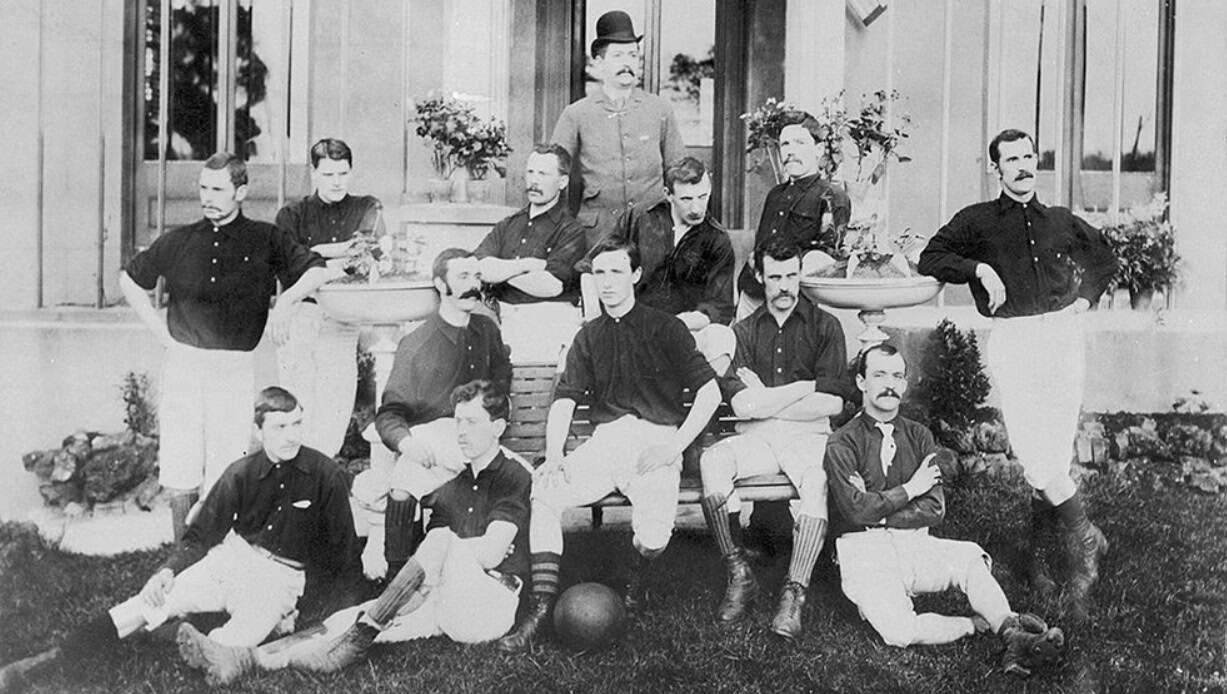
Arsenal were founded in 1886 by fifteen workers who had never run a football club before and had no particular reason to think they could. The date gets cited in anniversary posts and club histories. What it rarely explains is the fragility behind it. The team that started in south-east London, nearly collapsed from financial isolation, and ended up somewhere else entirely by necessity rather than design.
The founding year is the easy answer. The harder question is what “founded” actually means for a club that changed its name three times, moved boroughs, and spent its first three decades figuring out whether it could survive at all.
In my honest opinion, Arsenal’s founding story is more about stubbornness than vision. The workers who started it didn’t have a masterplan. They had a pitch, a whip-round, and enough belief to keep going when the geography was working against them.
The year Arsenal was founded and what triggered it
The club traces its origins to the autumn of 1886, when workers at the Royal Arsenal armaments factory in Woolwich, south-east London, decided to form a football team. The idea came from David Danskin, a Scotsman who had moved south for work and wanted to keep playing the game he’d grown up with.
Danskin didn’t wait for institutional support. He collected sixpence from each of the fifteen founding members and added three shillings of his own; the total funded a ball and not much else.
The team was called Dial Square, after one of the workshops inside the factory complex. Their first match came on December 11 that year, a 6–0 win over Eastern Wanderers, played on a patch of ground on the Isle of Dogs. For a team that had existed for a matter of weeks, the result was startling. For a club that would go on to win 13 league titles, it was a fitting beginning.
Dial Square became Royal Arsenal within weeks. The longer name tied the team more clearly to the factory that had produced it. In my view, that first renaming tells you something important: from the very start, Arsenal’s identity was bound up with where it came from, not just what it did on the pitch.
How the name changed and what each version meant
A club that changes its name three times in under thirty years is a club still working out what it is. Arsenal did exactly that, and each version of the name reflects a different stage of that uncertainty.
Royal Arsenal came first, in late 1886, an immediate upgrade from Dial Square that made the factory connection explicit. It gave the team a grander feel without changing anything about the ground, the players, or the finances.
By 1893, the club had turned professional and been elected to the Football League’s Second Division as Woolwich Arsenal. That name fixed them geographically. Useful for local identity; limiting for everything else. Woolwich sat away from the main population centres of London. The name told you exactly where you were — and that was part of the problem.
The final change came after the move to Highbury in 1913. “Woolwich” was quietly dropped, and the club became simply Arsenal. Shorter. More open. A name that didn’t anchor the club to a district it had already left.
In my humble opinion, the name evolution is the most honest record of Arsenal’s early history. Each version was a reach for something bigger… and the final one only worked because the move to north London had already happened.
The Highbury move when Arsenal became the club you recognize
If 1886 is when Arsenal were founded, 1913 is when they became the institution the world now knows. The move from Woolwich to Highbury was not a natural progression. It was a rescue operation.
Woolwich Arsenal had spent years fighting the geography. Attendances were low; rival London clubs were pulling in crowds the south-east location simply couldn’t match. The club ran into serious financial difficulty and came close to folding entirely in 1910.
Henry Norris, a property developer and football chairman with ambitions well beyond what Woolwich could offer, stepped in. He invested £125,000 in relocating the club to a new ground in Highbury, north London. The first match there, a 2–1 win over Leicester Fosse on September 6, 1913… marked the start of a different kind of Arsenal entirely.
The Woolwich chapter officially ended. The north London chapter, the one that produced the Invincibles and the Emirates and the global supporter base, began that afternoon.
That context matters when people ask when Arsenal were founded. The 1886 date is accurate. But the club that exists today was really assembled across two moments: a factory collection in Woolwich and a chairman’s cheque in Highbury.
What the founding year means for the club’s identity now
Not many football clubs can trace a continuous line back to 1886. Fewer still can trace it back to a workplace collection among ordinary workers rather than a wealthy patron or a civic institution. That origin has stayed with Arsenal in ways that are easy to overlook.
The club’s nickname, the Gunners, and the cannon on the badge both point directly back to the Royal Arsenal factory… a 140-year-old connection between what the founders made for a living and the identity the club still carries today. No rebranding has touched it. No stadium move changed it.
There’s an argument, in my view, that this is the most underrated thing about Arsenal as a club. The working-world character of its founding has survived commercialization, relocation, and nine-figure transfer fees. You don’t see that everywhere.
The tension is that 1886 Woolwich and 2025 Emirates are almost impossible to reconcile as the same institution… except that the badge says they are. Whether that continuity is meaningful or just historical branding is a question every generation of supporters quietly answers for themselves.
What the founding story actually settles
Arsenal were founded in 1886. The founding members were factory workers in south-east London. The club they started won its first match, changed its name, nearly went under, moved boroughs, and grew into one of football’s most recognised institutions.
None of that was planned. David Danskin collected sixpence from his workmates because he wanted to play football; what followed was a century of decisions, accidents, and reinventions that the original 15 founders couldn’t have anticipated.
In my honest opinion, that’s the part of the founding story that deserves more attention than the date itself. 1886 is a starting point. What happened after it is the actual story.
Frequently Asked Questions
When exactly was Arsenal Football Club founded?
Arsenal were founded in 1886, with the first recorded match taking place on December 11 that year — a 6–0 win over Eastern Wanderers. The club started as Dial Square, formed by workers at the Royal Arsenal factory in Woolwich. In my view, December 11 is the most precise founding date, though the club had been organising for several weeks before that first match.
Who founded Arsenal Football Club?
David Danskin is widely credited as Arsenal’s primary founder. A Scottish worker at the Royal Arsenal factory in Woolwich, Danskin organised the initial collection, contributed from his own pocket, and drove the formation of the club. Fourteen other workers joined him as founding members. None of them had any particular background in club management; they just wanted to play football.
Why was Arsenal originally called Dial Square?
Dial Square was the name of one of the workshops inside the Royal Arsenal factory complex in Woolwich, where several of the founding members worked. The name was practical rather than symbolic. The team needed something to call itself, and the workshop gave them a ready answer. Within weeks, the club had renamed itself Royal Arsenal, and the Dial Square name was left behind.
When did Arsenal move to north London?
Arsenal moved from Woolwich to Highbury in north London in 1913. The move was driven by financial necessity. The club had been struggling with low attendances and poor revenues at its south-east London ground. Chairman Henry Norris funded the relocation. The first Highbury match was played on September 6, 1913, against Leicester Fosse. In my humble opinion, this move matters as much as the 1886 founding date; it’s where the modern club actually took shape.
Is Arsenal one of the oldest football clubs in England?
Arsenal, founded in 1886, is among the older Football League clubs but not the oldest in England. Notts County (1862), Stoke City (1863), and Nottingham Forest (1865) all predate them. Arsenal’s significance isn’t its age relative to others; it’s that the club’s working-class founding has left a visible mark on its identity that most clubs of similar age have long since shed.